I’ve been working on the IT infrastructure design for a new business, with a focus on performance, security, reliability and future expansion.
For me, a good IT setup isn’t just about buying equipment and plugging everything in. It’s about understanding how the business will operate, choosing the right technology and designing an infrastructure that will support it for years to come.
💡 BOSS IT 12U RACK Network Design
We have chosen to build this network around the Ubiquiti UniFi ecosystem, providing centralised management, enterprise-grade networking features and the flexibility to expand as the practice grows.
Network Infrastructure Design – Layer 2/3, VLANs, Security & 10Gb DAC
The design is based around a UniFi Dream Machine SE firewall/router and a UniFi Pro 24-port PoE managed switch, connected through a 10Gbps SFP+ DAC uplink. This provides a high-capacity backbone between the switching and routing infrastructure, with centralized management and room for future growth.
One of the main considerations is Layer 2 and Layer 3 network segmentation using VLANs. Rather than having everything on one flat network, I’m planning separate VLANs for corporate devices, network management, guest Wi-Fi, CCTV and other equipment. At Layer 2, VLANs separate broadcast domains, while Layer 3 routing through the firewall allows communication between networks to be controlled using specific security policies.
For example, guest Wi-Fi should have internet access but no access to internal workstations or management interfaces. Likewise, CCTV equipment shouldn’t have unrestricted access to the corporate network. This is where inter-VLAN firewall rules, access control and the principle of least privilege become important. A separate VLAN or physical switch alone doesn’t guarantee security; the routing and firewall configuration are what enforce the restrictions.
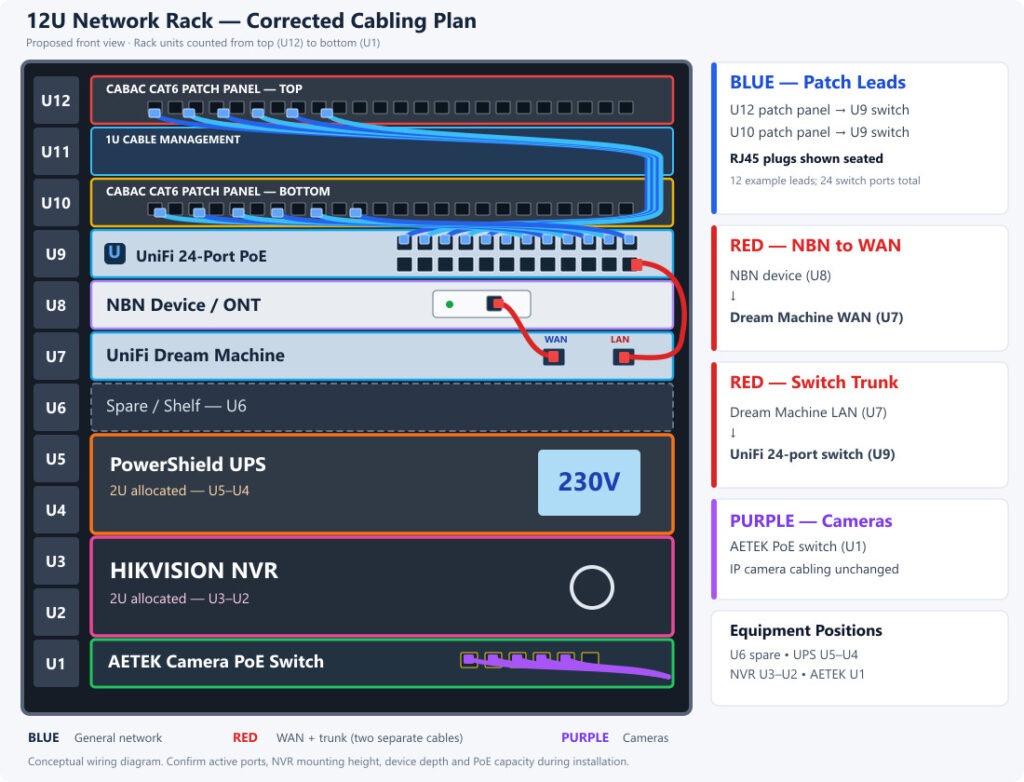
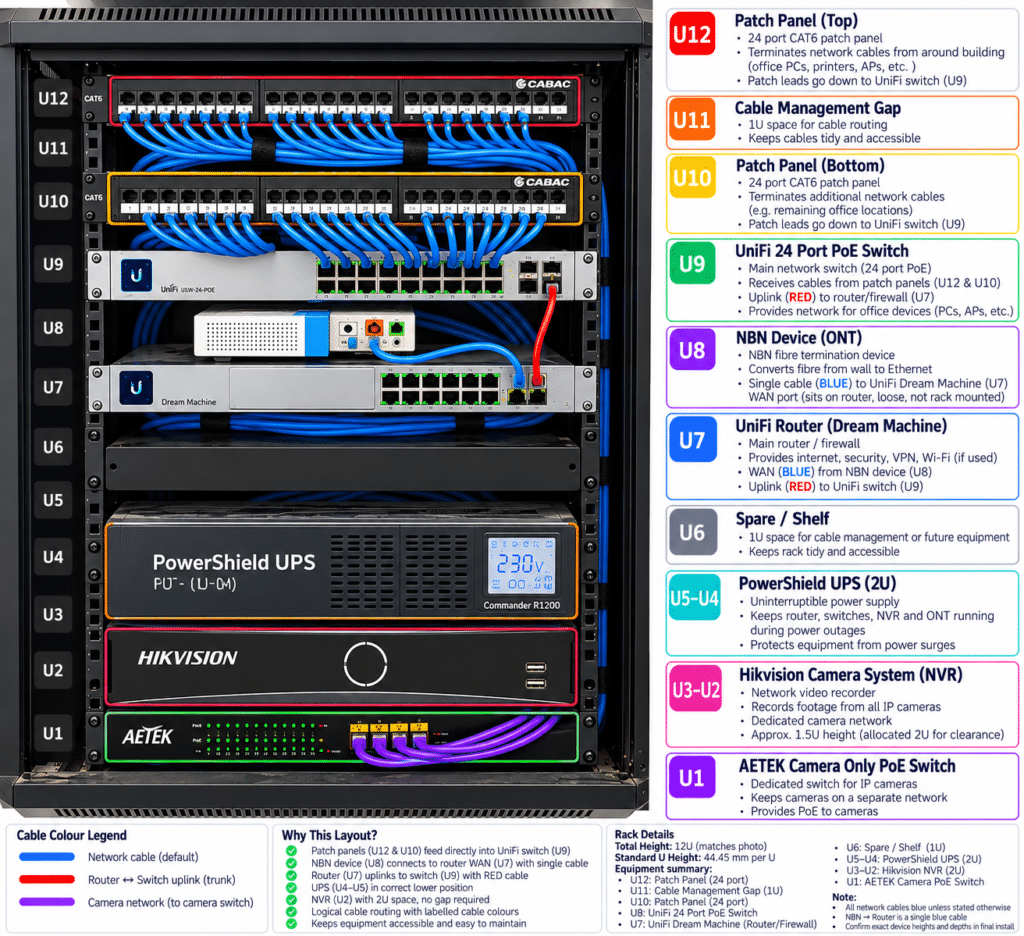
The setup also incorporates Wi-Fi 7 access points, PoE distribution, structured CAT6 cabling, dedicated CCTV switching and UPS protection. I’ve also considered the limitations of the hardware, including 1Gbps access ports, PoE budgets, firewall throughput and how the 10Gbps backbone fits into the overall design.
Even the physical rack layout has been planned around cable management, equipment placement, accessibility and future maintenance. Once installed, the important part will be validating VLAN isolation, firewall policies, routing, DHCP, wireless coverage, uplink performance and recovery procedures.
There’s a big difference between installing networking equipment and actually designing a network properly.