Posted on by admin in Programming | Comments Off on BOSS IT DEV DIARY 00007 – How I Create 2D Enemies using AI and Gimp with Unity3D – Workflow Hack
My process for making 2D Characters that requires NO Art skills.
I’ve put a lot of time and effort into making videos. If you’re enjoying what you see, please consider liking and subscribing. Your support makes a huge difference and gives me the motivation to keep creating. With more subscribers, I can dedicate even more time and energy to bring you the best content possible!
Posted on by admin in Programming | Comments Off on BOSS IT DEV DIARY 00006 – GUI/Ambient Audio | FLStudio | StaminaBar | GetComponents | Commit to Git
I Let Youtube remove music and it made a mess of the audio.
Worked on AudioManager for GUI and Created Ambience Mixer
Created Score Points Tone in FLStudio
Got Stamina Bar working, Feeds player when Fly killed and drains when player runs
Troubleshooted UI issues for Points and Scoring, trying to find where audioclip is being played from. was on the Fly. (Not ideal)
Fix GetComponents on legs getting more than leg animators
Adjusted Fangs animations
Commit to GitHub
Created a Build that works well.
Posted on by admin in Gaming, Programming | Comments Off on Dev Diary 00003 – From GoDot Back to Unity
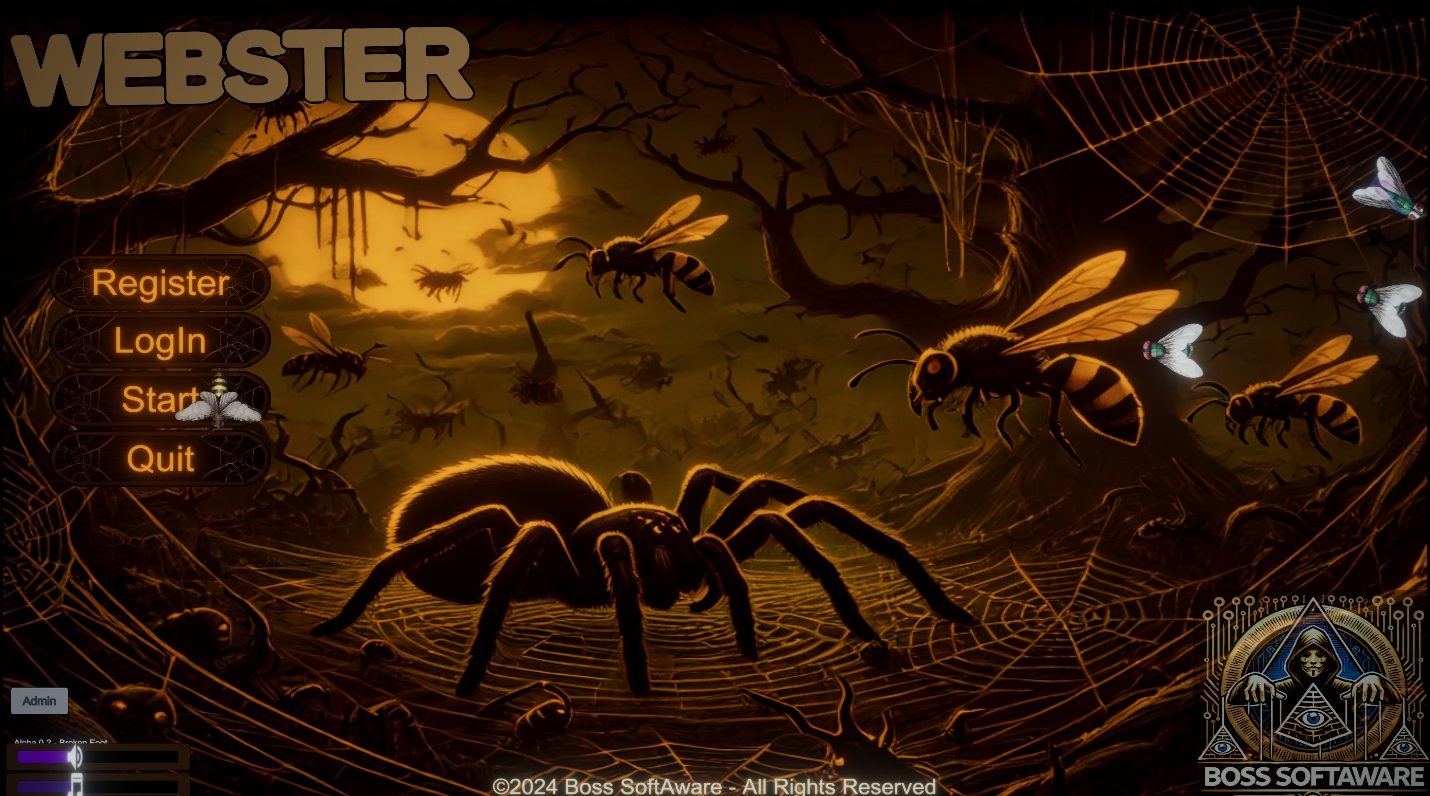
“Webster’s Development Journey: From GoDot Back to Unity”
After two years of trying to move Webster to GoDot, we decided to return to Unity, sticking with what we know best. This decision has been a major turning point for the project. With the introduction of AI tools, our development has accelerated like never before. Our creative and programming potential has reached new heights, and every day brings exciting new challenges. Plus, we’re composing all our own music and sound where possible, further personalizing the experience.
We’ve completely remade Webster, and in this video, you’ll see the stark difference: before AI, with just 0.5 years of experience, versus after AI, with two solid years of growth and learning. The improvements are incredible.
The goal is to publish Webster, and whether it succeeds or not isn’t the point—this journey has been all about persistence and passion. Success doesn’t happen overnight, and it’s that drive that keeps us moving forward.
This video shows a glimpse of Webster before (Unity 2022 and prior) and after (2024+), showcasing just how far we’ve come.
Posted on by admin in Programming | Comments Off on Our Shift to Unreal Engine 5: MoboNode’s Experience Beyond Unity3D
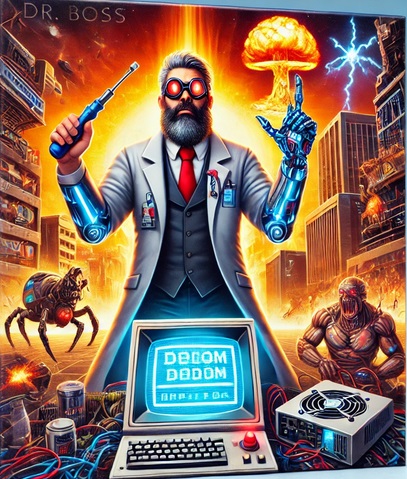
MoboNode is a passion project where players take on the role of Dr. Boss, a computer scientist shrunk down inside an old PC whilst investigating AI Ethics at CERN. As he navigates a hazardous environment, he will battle digital threats and demonic entites, repair malfunctioning components and maintain the PC. The game is structured around linear missions involving fixing components, defeating enemies, and uncovering the fate of other scientists.
VIDEO PREVIEW OF IN DEV
Core gameplay revolves around base building and combat. Players can craft tools as weapons—like screwdrivers and EMF bombs—to combat rats, roaches, demonic entities, viruses and rogue updates (anything you expect to find inside a PC case). A base of operations exists inside the Power Supply Unit (PSU) serves as a safe zone for crafting and resting, creating a balance between exploration(combat) and strategy. The visual style leans into a retro aesthetic reminiscent of classic FPS games, while character design reflects a blend of human and machine elements. Key locations feature distinct environments, from the chaotic motherboard to the safe haven of the PSU.
After years of building MoboNode in Unity3D, we faced a pivotal decision: stick with what we knew or embrace the cutting-edge features of Unreal Engine 5. This was over a year ago! While the transition has presented its challenges, we firmly believe it’s the right move for our project.
We want MoboNode to stand out visually, and Unreal Engine 5’s advanced rendering capabilities, like Nanite and Lumen, promised to bring our vibrant world to life in ways Unity simply could not. Nanite allows for incredibly detailed assets without the usual performance trade-offs, while Lumen offers dynamic global illumination, creating realistic lighting that adapts in real time. This leap in visual fidelity has opened up exciting possibilities for MoboNode’s aesthetic, allowing us to create a more immersive experience for players.
However, switching game engines is no small feat, and we quickly realized the journey would not be without its struggles. Here are some key challenges we faced:
Unreal Engine 5’s Blueprints system feels like learning a new language. It offers a robust visual scripting environment that, while powerful, can be overwhelming compared to Unity’s simpler interface. As someone who prefers coding in C#, embracing Blueprints has become a necessity to fully leverage the engine’s capabilities. This shift required us to adapt our thinking and workflow significantly.
Migrating assets from Unity to Unreal was another hurdle. While some assets could be converted, others needed to be reworked or recreated to fit Unreal’s framework. This process was time-consuming but ultimately rewarding, allowing us to revisit and enhance our art and design.
Despite these challenges, the decision to switch to Unreal Engine 5 has begun to pay off, enhancing the overall vision for MoboNode.
Posted on by admin in Programming | Comments Off on Unity3D | Unreal Engine & Godot | What to choose?
They are all great Engines and nothing is ever 100%. Utlimately it boils down to what kind of work your going to be doing, solo or team and/or creative art style 2D or 3D? Myself, I like to DIY everything and not use other peoples assets (I use Gimp(2D art) Blender(3D art) and FlStudio (Music Production).
If i were a starting Developer and making only solo games, using simple pixel art style, I would choose GoDot hands down. If i were a more 3D enclined artist, maybe have a team, dont mind lisencing agreements, then I would go with Unity3D, and if i wanted to focus on c++ and Realistic Environments, I would go with Unreal, However I would expect it would be a large investment of time to master.
Unity: Pragmatic Choice
Familiarity: Unity’s user-friendly interface and C# scripting language align with my existing skills, i have about 20+ projects in Unity3D since 2018 and used it for my University assignments.
Quick Deployment & Prototyping: Unity’s rapid development cycle and cross-platform support. Prototyping is easy, building on mobile is easy.
Strong Community: Extensive documentation and a supportive community aid in troubleshooting and learning.
Unreal Engine: The Tempting Beast
Impressive Graphics: Unreal’s graphical capabilities are unmatched, creating stunning visual experiences. My machine struggles with the Matrix Demo running a $600 video card. We also lack an artist.
High Learning Curve: Unreal’s complexity and resource requirements can be challenging, especially for solo developers.
Potentially Overkill: Unreal Engine 5’s advanced features may be excessive for my current projects.
HOWEVER if i was a newbie, id start with structured Unreal courses and/or playing around in GoDot.
Godot: The Open-Source Appeal
Simplicity and Flexibility: Godot’s lightweight nature and intuitive design provide a refreshing alternative.
Open-Source Philosophy: Godot’s open-source nature aligns with my values and provides freedom in development.
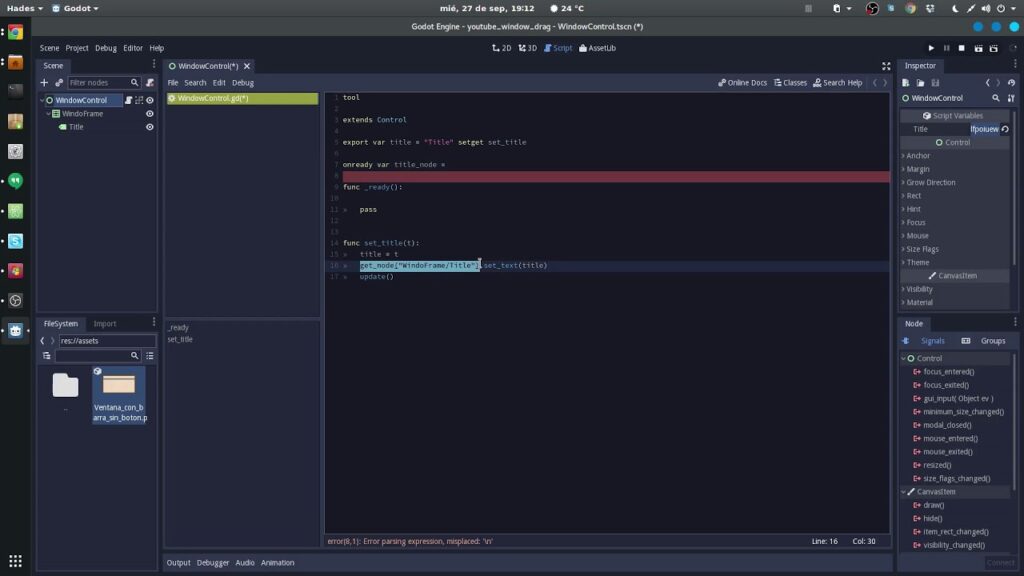
Limited Experience: While intrigued by Godot’s potential, I haven’t fully explored its capabilities yet. I did start to re-create an existing project in it, and got quite far however I struggled with its Sprite system and had to start using 3rd party apps to do splicing and things.
Unity as the Practical Choice
Less delays, less procrastination, when using unity and it meets my current demands, I remain open to exploring Unreal Engine and Godot further as my skills progress.
In Conclusion
Practicality Prevails: Unity’s practical advantages make it my engine of choice for current projects.
Openness to Exploration: While committed to Unity, I acknowledge the potential of Unreal Engine and Godot for future endeavors.
Game Development Journey: As I continue to grow and learn, the dynamic landscape of game development promises new adventures and discoveries.
My dream would to be able to make full envrionments in Blender and UE5 utilizing Nanite and Lumen on my own models, but that would take up my entire life.
Posted on by admin in Community | Comments Off on We’re still here and going strong!
Hey everyone! We hope you’re all doing well. Just a quick update to let you know that we’re still here and going strong! We’ve been pretty busy lately, which is why we haven’t been as active on social media. We believe in being hands-on and efficient, which is why we handle our social media in-house rather than outsourcing it. At the moment, we haven’t found a compelling reason to post aside from letting you know we’re still around. However, we’re open to suggestions! If you have any questions or ideas for interesting content, feel free to share them with us. Your feedback means a lot to us. Thanks for your continued support!
Posted on by admin in Ethics, AI | Comments Off on Dead Internet is FACT not Theory
As a veteran IT consultant with over two decades of experience, I’ve witnessed the evolution of the internet from its nascent stages to its current state. I have noticed I am spending more time away from the internet. Why? One theory that has garnered significant attention in recent years is the “Dead Internet” Theory, which posits that a substantial portion of online engagement is artificial and that users are effectively segregated into algorithmically defined bubbles.
Not every individual online is truly connected to one another but rather exists within a curated subset of connections. While some may dismiss this as nostalgia for the early days of the internet, there are compelling trends and circumstances that lend credence to this notion.
It’s worth noting that they have had AI for much longer than the population has, the cat is out of the bag, and they are trying to put it back in.
Several factors contribute to the plausibility of the Dead Internet Theory:
Immense Bot Traffic: A significant portion of web traffic is attributed to bots rather than humans. These bots, whether benign or malicious, contribute to the distortion of online interactions.
Content Generation Tools: Advancements in AI have lowered the barrier for bots to mimic human behavior, blurring the lines between genuine and artificial engagement.
Big Tech Consolidation: The dominance of a few major online platforms facilitates control over information dissemination and user behavior.
Reach Control: Major platforms exert control over what content users see, effectively shaping narratives and controlling information flow.
Virtualized Segregation: Users may be segregated into algorithmically defined bubbles, limiting exposure to diverse perspectives and interactions.
Internet Censorship & Shutdowns: Escalating censorship threatens the openness of the internet, transforming it into a tool for propaganda and control.
Human Disengagement: Despite increased online presence, genuine participation has stagnated, leading to a disconnect between online interactions and real-life engagement.
While the internet isn’t dead, it’s undeniably facing existential threats. However, there’s hope for reclaiming cyberspace:
Maintain a non-commercial web space: By fostering independent and personal online spaces, individuals can resist censorship and foster meaningful interactions.
Use open protocols and opensource: Embracing open protocols and opensource platforms can empower users to break free from corporate control and engage in genuine online interactions.
Through collective action and a commitment to open and independent online spaces, we can steer the internet away from its current trajectory towards a more vibrant and inclusive future.