Fixed BOSS AI GUI so it actually works without breaking. The menu used to vanish when launching Ollama, debug mode didn’t log properly, and AI responses had no indication of processing. Now Ollama runs in the background, AI shows a “Please wait…” message while thinking, and debug mode actually logs stuff.
This is AI on our terms. Local Machine Model (LLM), completely isolated, and running on hardware that was never meant to be used like this. The Dell T7500 Xeon had been collecting dust, an old workstation from a different era. Dual processors, loads of instruction sets, and a 2.6GHz clock speed still holding strong. It was more than enough for what I had planned.
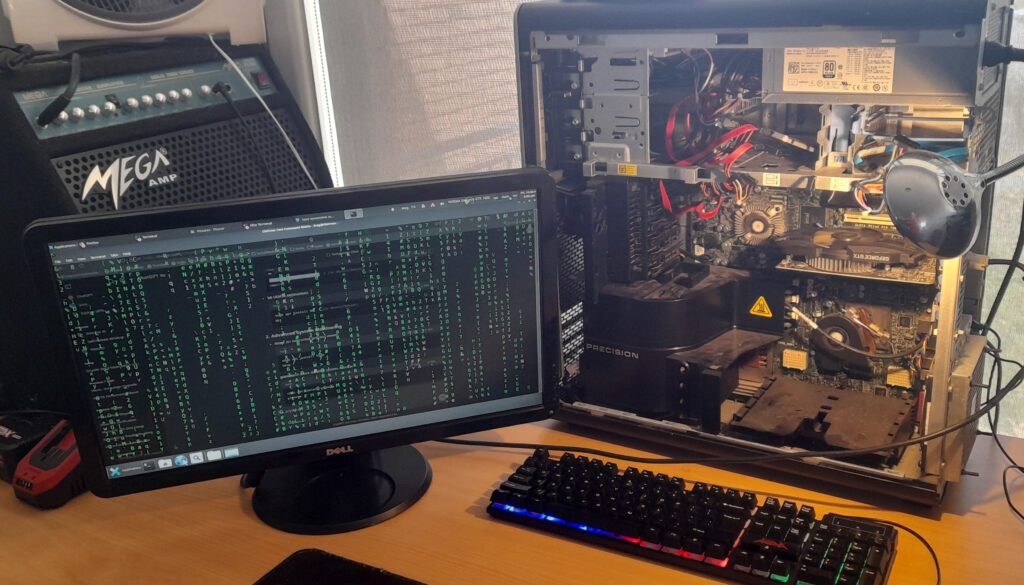
The first obstacle was the SAS controller. We initially tried installing Arch Linux, but the installer outright refused to boot. Switched to Ubuntu, same issue. Different SSDs, multiple USB installers, nothing worked. Digging through failed installation logs finally led to the problem: the SAS controller was interfering with disk initialization. Even after disabling it in BIOS, the system still insisted on trying to interact with nonexistent drives. SAS may have been great for enterprise HDD arrays, but with SSDs, it’s just baggage. No TRIM support, unnecessary complexity, and now actively blocking progress. The only solution was to rip it out and rewire everything to SATA. The moment the OS booted and the old Windows install confirmed the SSDs were fine.
But the display… The massive TV screen we initially used made everything unreadable, with scaling so bad we couldn’t even access the BIOS properly. After installation, we managed to fix it through Nvidia’s control panel, but that was just a temporary patch. The real fix was swapping the TV out entirely for an old 21” DVI monitor. Instantly, everything looked as it should.
Wi-Fi and Bluetooth? Gone. There’s no reason for this machine to have any wireless connectivity. wpa_supplicant, bluez, and every related package were wiped from existence. This system would exist in pure isolation, with only direct LAN access under strict firewall rules. No SSH, no open ports.
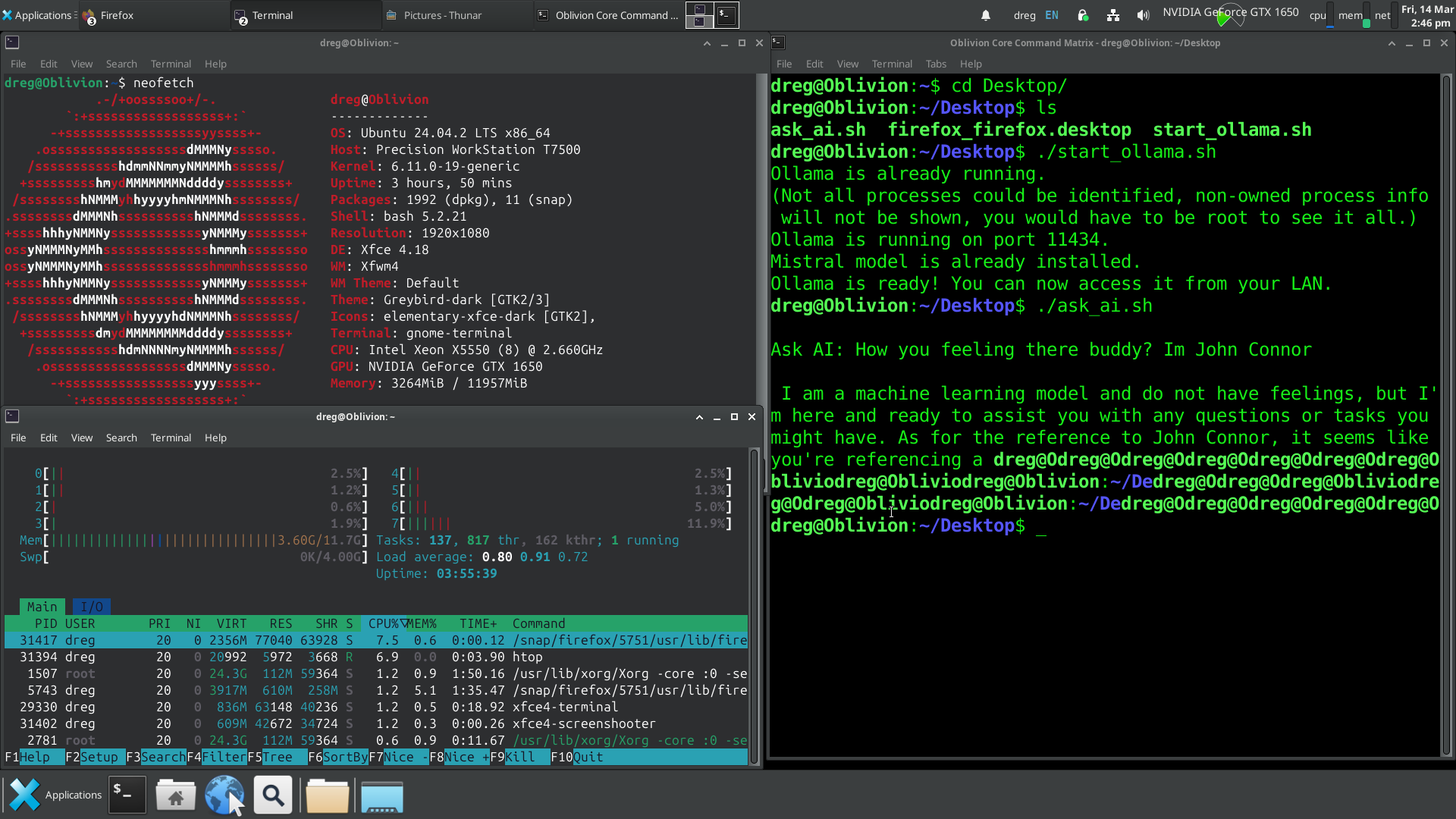
With the foundation secured, it was time to bring the AI online. We deployed Ollama, the perfect runtime for local AI models, and pulled in Mistral 7B. At only 5GB, it’s remarkable how much this model can process, entirely offline. CUDA acceleration was enabled, confirmed through nvidia-smi, ensuring that the GTX 1650 was doing its job. The model ran smoothly, the system remained stable, and BOSS AI was born – A fully operational local AI.
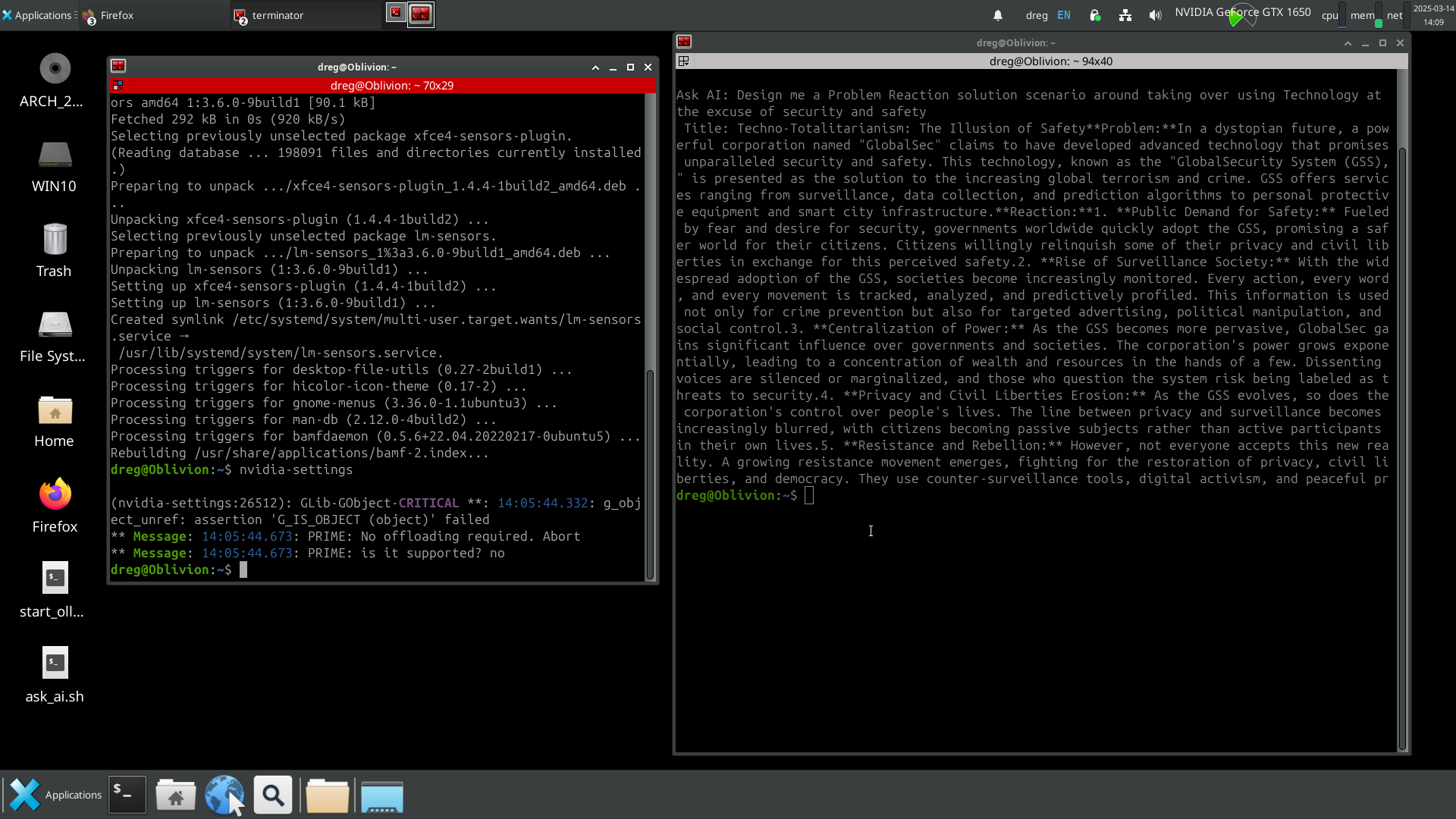
Does it replace ChatGPT? Not yet. (working on it in late 2025), and it’s completely private, but ChatGPT still has the advantage in speed and refinement. That said, the fact that a 5GB model can generate this level of response without ever touching the internet is a game changer.
BOSS AI – We built a fully operational AI system, completely local.
As a veteran IT consultant with over two decades of experience, I’ve witnessed the evolution of the internet from its nascent stages to its current state. I have noticed I am spending more time away from the internet. Why? One theory that has garnered significant attention in recent years is the “Dead Internet” Theory, which posits that a substantial portion of online engagement is artificial and that users are effectively segregated into algorithmically defined bubbles.
Not every individual online is truly connected to one another but rather exists within a curated subset of connections. While some may dismiss this as nostalgia for the early days of the internet, there are compelling trends and circumstances that lend credence to this notion.
It’s worth noting that they have had AI for much longer than the population has, the cat is out of the bag, and they are trying to put it back in.
Several factors contribute to the plausibility of the Dead Internet Theory:
- Immense Bot Traffic: A significant portion of web traffic is attributed to bots rather than humans. These bots, whether benign or malicious, contribute to the distortion of online interactions.
- Content Generation Tools: Advancements in AI have lowered the barrier for bots to mimic human behavior, blurring the lines between genuine and artificial engagement.
- Big Tech Consolidation: The dominance of a few major online platforms facilitates control over information dissemination and user behavior.
- Reach Control: Major platforms exert control over what content users see, effectively shaping narratives and controlling information flow.
- Virtualized Segregation: Users may be segregated into algorithmically defined bubbles, limiting exposure to diverse perspectives and interactions.
- Internet Censorship & Shutdowns: Escalating censorship threatens the openness of the internet, transforming it into a tool for propaganda and control.
- Human Disengagement: Despite increased online presence, genuine participation has stagnated, leading to a disconnect between online interactions and real-life engagement.
While the internet isn’t dead, it’s undeniably facing existential threats. However, there’s hope for reclaiming cyberspace:
- Maintain a non-commercial web space: By fostering independent and personal online spaces, individuals can resist censorship and foster meaningful interactions.
- Use open protocols and opensource: Embracing open protocols and opensource platforms can empower users to break free from corporate control and engage in genuine online interactions.
Through collective action and a commitment to open and independent online spaces, we can steer the internet away from its current trajectory towards a more vibrant and inclusive future.